Sales: (833) 821-1398
Service: (450) 436-8211
Parts: (450) 436-8211

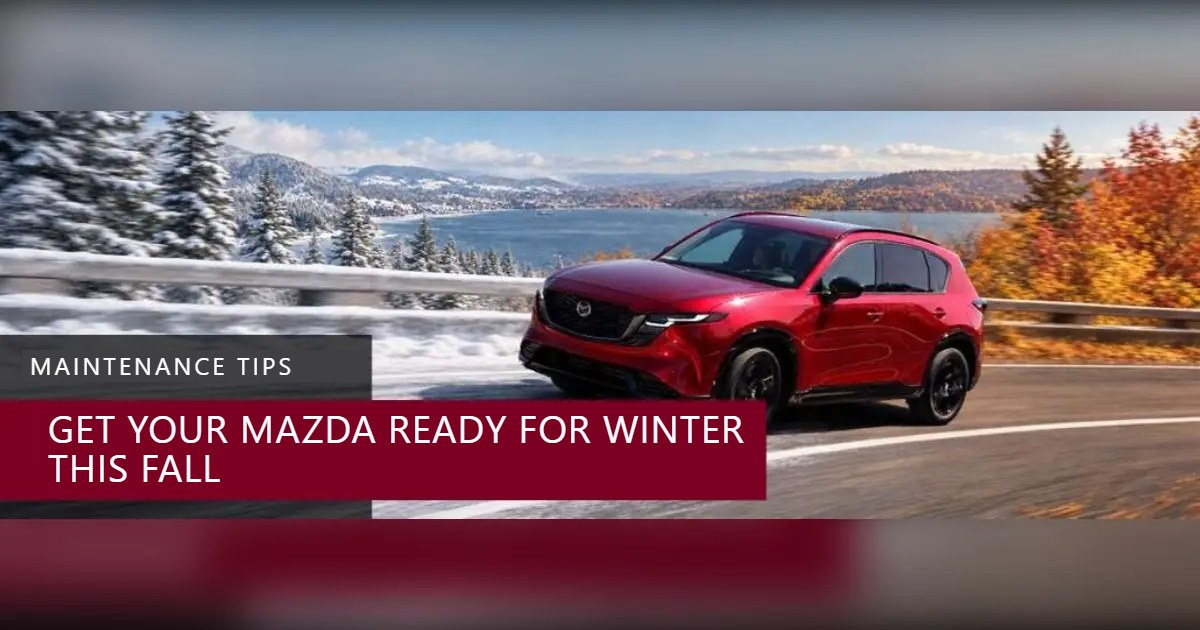
In Quebec, winter can arrive sooner than you think. Intense cold, snow, ice and salt-covered roads put your vehicle to the test. That’s why Mazda winter preparation in the fall helps you avoid unpleasant surprises and drive more safely when the first wintry conditions show up.
Here is our complete Mazda winter preparation checklist so you can take on the cold season in the Laurentians with confidence.
In Quebec, winter tires are mandatory from December 1 to March 15. They must also bear the pictogram of a three-peaked mountain with a snowflake (see the SAAQ’s winter tire recommendations). That said, the first snow often arrives well before December. It’s therefore best to plan your tire installation as soon as temperatures regularly drop below 7°C, the point at which the rubber in summer and all-season tires hardens and loses grip.
If you wait too long, you may end up with fewer appointment options… or with winter weather before you’re even ready. Browse our selection of Mazda tires and accessories to find the right ones for your vehicle, or book your tire change in Saint-Jérôme.
While you’re at it, have the following checked:
Indeed, tires in good condition improve your Mazda’s grip, braking and stability on cold, snowy or icy roads. Also keep in mind that age matters: according to the SAAQ, a tire more than 5 years old generally starts to lose its qualities, even if the tread still looks fine.
Good to know: tire pressure drops by about 1 psi every time the temperature falls by 5 to 6°C. Check it regularly throughout the winter, ideally when the tires are cold, using the recommended pressure on the label inside the driver’s door frame.
Cold weather can reduce a battery’s performance, especially if it’s already showing signs of weakness. Slower-than-usual starts, dimmer headlights or electrical accessories that struggle to work can all indicate that a check is needed.
Having your battery tested in the fall therefore tells you its condition before the deep cold sets in, so you don’t get stranded on a particularly frigid morning. If your battery is more than 4 or 5 years old, a test is all the more recommended. Our technicians also check the terminals and cables, since corrosion can affect starting.
Your Mazda’s various fluids help keep it running smoothly all winter. A fall inspection lets you check, among other things:
It’s also a good idea to keep an extra jug of washer fluid in the vehicle. Dirty roads, salt and slush can quickly reduce visibility. If your oil change is coming up, this is the perfect time to combine it with your tire change and save yourself a trip.
Worn wiper blades can leave streaks on the windshield and make driving harder during a storm or when roads are covered in slush.
So if your wipers are noisy, skip across the windshield or clean less effectively, it’s probably time to replace them. Winter wiper blades can also better withstand snow, ice and low temperatures. Quick tip: in freezing weather, avoid turning on the wipers when they’re stuck to the windshield; instead, let the defroster do its job for a few minutes.
On a slippery road, every metre of braking distance counts. Before winter, it’s therefore important to have your brake pads, rotors and brake fluid inspected.
It’s also a good time to check that your headlights, tail lights, defroster and heater are working properly. Moreover, good visibility helps you see the road better and makes it easier for other drivers to see you.
Most recent Mazda models are equipped with i-ACTIVSENSE safety technologies: smart braking, adaptive cruise control, blind spot monitoring, lane-keeping assist and more. However, these systems rely on radar sensors, cameras and proximity sensors that must stay clean to work properly.
In winter, make a habit of clearing:
If a warning message appears on the dashboard, it’s often simply a sensor blocked by snow or ice. And if your Mazda is equipped with i-ACTIV AWD all-wheel drive, remember that it helps you get moving and stay on course, but it doesn’t replace good winter tires when it comes to braking.
In addition, the salt and abrasives used on the roads can build up on the body and under the vehicle. A thorough cleaning before winter, along with proper protection (wax, rustproofing), can help preserve the paint and limit the effects of corrosion.
Throughout the winter season, also remember to wash your Mazda regularly, especially after driving on heavily salted roads. Don’t forget the underbody and wheel wells, where salt builds up the most. Rubber winter floor mats will also protect the interior from slush and calcium stains.
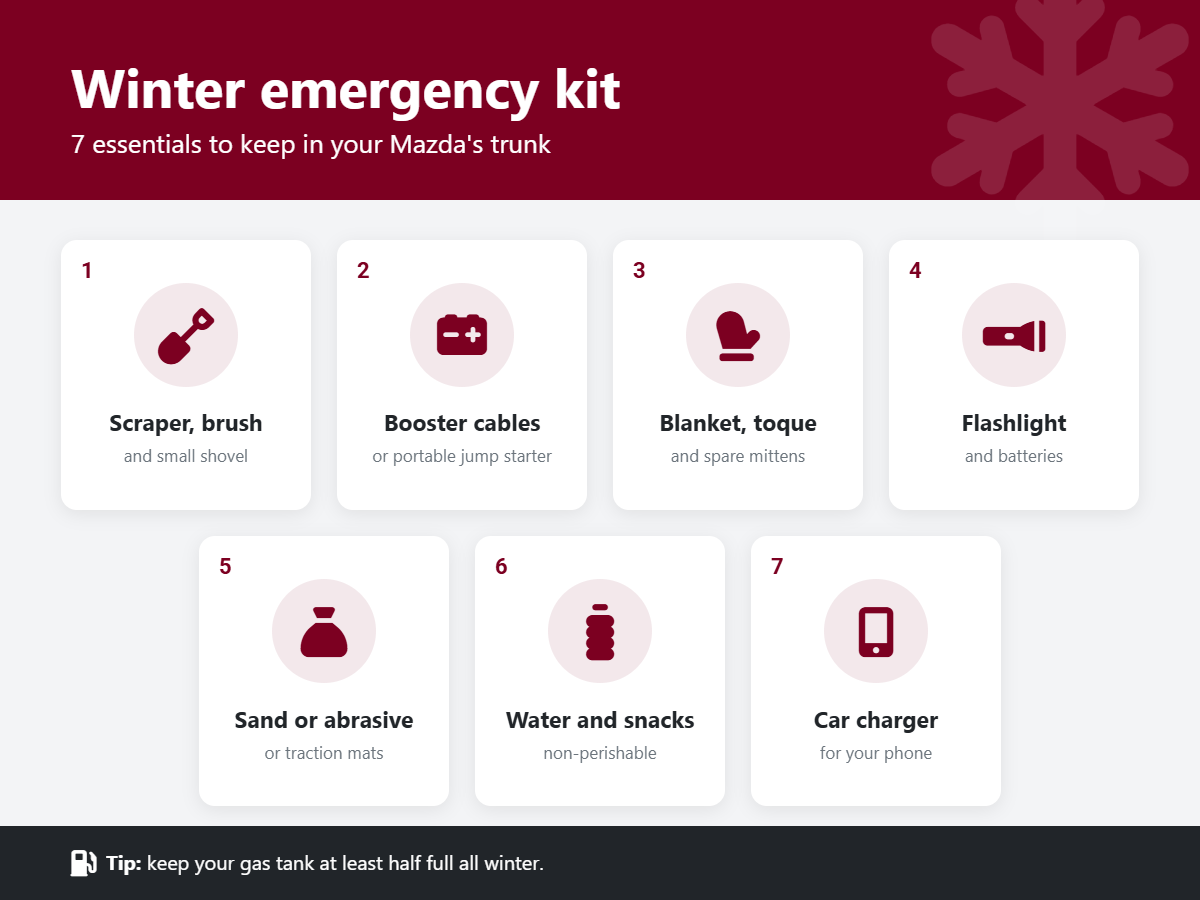
Even with a well-maintained vehicle, a storm or going off the road can leave you stranded. That’s why a small kit in the trunk makes all the difference:
| Item | What to check | When |
|---|---|---|
| Winter tires | Pictogram, wear, pressure, age | As soon as temperatures drop below 7°C (before December 1) |
| Battery | Load test, terminals and cables | Before the deep cold |
| Fluids | Antifreeze, oil, brakes, -40°C washer fluid | In October, then washer fluid all winter |
| Wiper blades | Streaks, noise, worn rubber | As soon as they leave streaks |
| Brakes and lighting | Pads, rotors, headlights, defroster | During your tire change |
| i-ACTIVSENSE sensors | Radar, camera and sensors clear | After every snowfall |
| Body | Washing, wax, rustproofing | Before winter, then regular washes |
| Emergency kit | Shovel, cables, blanket, flashlight | Before the first snowfall |
As soon as temperatures regularly drop below 7°C, and before the deadline set by Quebec.
Yes. Cold weather reduces its capacity. A battery that tests weak in the fall is likely to fail on the first frigid morning.
A blanket, gloves, a shovel, a scraper, a flashlight, booster cables and water.
In short, Mazda winter preparation in the fall lets you drive with greater peace of mind and avoid the rush for appointments when the first snow falls.
In fact, the Mazda Saint-Jérôme service team can inspect your vehicle, install your winter tires and help you get your Mazda ready for Quebec road conditions.
Book your appointment now and be ready before winter arrives.
Live in Saint-Lin–Laurentides or elsewhere in southwestern Lanaudière? We’re about 25 minutes away via Route 158. See our Mazda dealer near Saint-Lin page. We also serve customers in Prévost, Saint-Colomban, Sainte-Sophie and Saint-Hippolyte.